
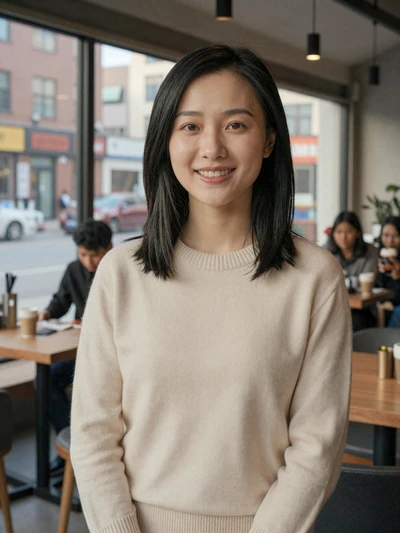
Wei
Calligraphy, hiking, classical music
Meet ambitious, educated Chinese women who blend ancient cultural values with modern independence. Browse verified profiles from Beijing, Shanghai, Guangzhou, and across China.
Real women, verified profiles, ready to connect
Calligraphy, hiking, classical music
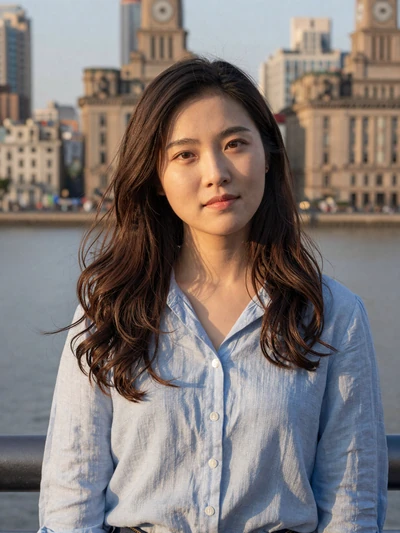
Fashion design, yoga, travel
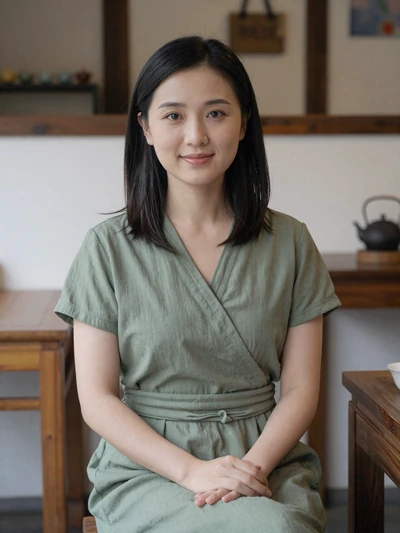
Cooking dim sum, reading, photography

Tech startups, swimming, piano
Sichuan cuisine, dancing, nature walks
Tea ceremony, painting, cycling

Museum visits, running, film
Architecture, violin, gourmet cooking
Chinese women dating offers a unique path to meaningful cross-cultural relationships with some of the most educated, ambitious, and family-oriented women in Asia. China's 1.4 billion population includes over 680 million women (National Bureau of Statistics of China, 2025), and an increasingly internationalized younger generation is more open to meeting Western partners than at any point in modern history. According to the China Internet Network Information Center, over 340 million Chinese citizens used online dating platforms in 2025 - a 23% increase from 2022 - making China the largest online dating market in the world by user count.
What distinguishes Chinese women dating from other international dating categories is the intersection of millennia-old cultural traditions with rapid modernization. Chinese women in major cities like Beijing, Shanghai, and Shenzhen are highly educated, career-driven, and financially independent - yet many still value traditional family structures, filial piety, and long-term commitment. This blend of modern ambition and cultural depth creates partners who are both intellectually stimulating and deeply devoted to building stable, lasting relationships.
The concept of "sheng nu" - literally "leftover women" - is one of the most important cultural dynamics shaping Chinese women dating in 2026. Coined by the All-China Women's Federation in 2007, the term labels unmarried women over 27 as socially undesirable, creating enormous pressure on educated, successful Chinese women to marry before an arbitrary cultural deadline. A 2025 survey by Zhaopin Recruitment found that 74% of Chinese women aged 25-35 report experiencing "marriage anxiety" from parents, relatives, or colleagues.
Here's the thing: this pressure disproportionately affects the exact women Western men find most attractive - highly educated, career-accomplished, independent women who don't fit the narrow timeline Chinese society imposes. A woman with a master's degree from Tsinghua University who prioritized her career until 30 might be considered "too old" by domestic standards, while Western men see her as ideal: accomplished, worldly, and ready for a mature relationship. This cultural mismatch creates a genuine opportunity for cross-cultural connections built on mutual respect rather than arbitrary age cutoffs.
The pressure manifests in ways that may surprise Western men. "Marriage markets" - open-air gatherings in public parks where parents display their adult children's biographical details on printed sheets - operate every weekend in cities like Shanghai's People's Park and Beijing's Zhongshan Park. Parents trade information about their children's height, education, salary, housing status, and even blood type. According to a 2025 China Youth Daily report, an estimated 30,000 parents participate in Shanghai's People's Park matchmaking market every weekend. While younger, urban Chinese women often find this tradition embarrassing, it illustrates the depth of familial investment in marriage.
For women who reject this system, international dating offers an alternative path to partnership that honors their achievements rather than penalizing them. Many Chinese women on our platform explicitly state that they seek Western partners because Western men "value who I am, not just my age." This isn't about rejecting Chinese culture - it's about finding a partner who appreciates the whole person.
China is not monolithic. The dating experience varies dramatically between regions, and understanding these differences is critical for any Western man pursuing Chinese women dating. A woman from cosmopolitan Shanghai and a woman from conservative Xi'an may share a nationality but operate under very different cultural expectations.
Tier-1 cities (Beijing, Shanghai, Guangzhou, Shenzhen): Women here are typically the most internationally minded, highly educated, and career-focused. English proficiency is higher (40-60% conversational ability in professional circles, EF EPI 2025), exposure to Western culture through travel and media is extensive, and dating norms are more relaxed. These women are likelier to initiate contact, express preferences directly, and prioritize personal compatibility over family approval - though family still matters significantly.
Tier-2 cities (Chengdu, Hangzhou, Nanjing, Wuhan): These cities offer a fascinating blend of modern aspiration and traditional values. Women here tend to be university-educated, ambitious, yet more connected to extended family expectations than their Tier-1 counterparts. Chengdu, in particular, has a reputation for producing some of China's most beautiful and warm-natured women - a perception so widespread it's become a cultural cliché within China itself. English proficiency is moderate, so translation tools may be helpful early on.
Smaller cities and rural areas: Traditional values dominate. Parental approval is not optional - it's a prerequisite. English proficiency is low, and Western cultural familiarity is limited. However, women from these areas often demonstrate the strongest commitment to family, homemaking, and long-term loyalty. If you're drawn to traditional Chinese values over modern cosmopolitanism, women from smaller cities may be an excellent match. Just be prepared for a longer cultural adjustment process for both partners.
For Western men also considering East Asian alternatives, comparing Chinese dating culture with Taiwanese women dating reveals important differences. Taiwanese women share many cultural roots but operate within a democratic, more Western-influenced society with greater gender equality and less marriage pressure. Similarly, Korean women dating involves distinct cultural protocols - from 100-day anniversaries to hierarchical social expectations - that differ substantially from Chinese norms.
Family approval in Chinese dating isn't a formality - it's a dealbreaker for the vast majority of Chinese women. A 2025 survey by the Chinese Academy of Social Sciences found that 82% of Chinese women aged 25-40 would not proceed with marriage without parental consent, even if they personally loved their partner. Understanding this dynamic is essential for any Western man seriously pursuing a Chinese woman.
The concept of "filial piety" (孝, xiào) - deep respect and care for one's parents - has been a cornerstone of Chinese civilization for over 2,500 years. It's not a relic of the past; it's a living, daily practice. Your Chinese partner will likely call her parents every day, consult them on major decisions, and expect you to demonstrate respect toward them in specific, culturally prescribed ways.
"When I met Mei's parents in Hangzhou, I was nervous about everything - the tea ceremony, the formal dinner, the questions. But I realized they weren't testing me. They were welcoming me. The moment her father poured me tea, I understood: this family doesn't just accept you, they adopt you." - Michael, 44, California, engaged to a Chinese woman since 2025
What does this mean in practice? When your relationship progresses beyond casual dating (typically 3-6 months), expect a formal family introduction. Her parents will assess your character, career stability, financial situation, and - candidly - your long-term intentions. This isn't interrogation; it's investment. Chinese parents who raised their daughter through the competitive pressure of the gaokao (college entrance exam), funded her education, and supported her career want assurance that their efforts culminate in a happy, stable life for their child.
The real question is: how do you navigate this successfully as a foreigner? Three strategies consistently work. First, learn basic Mandarin greetings - "nǐ hǎo" (hello), "xièxie" (thank you), and especially addressing her parents as "shūshu" (uncle/father) and "āyí" (aunt/mother) demonstrates respect that transcends language barriers. Second, bring thoughtful gifts: quality tea, premium fruit, or specialty items from your home country. Third, demonstrate stability through concrete actions - showing photos of your home, discussing your career trajectory, and expressing clear marriage intentions.
| Cultural Aspect | Chinese Dating | Taiwanese Dating | Korean Dating |
|---|---|---|---|
| Family Involvement | Very high - parental approval critical | High - but less rigid than mainland | Very high - hierarchical expectations |
| Marriage Pressure | Intense - "sheng nu" stigma after 27 | Moderate - more relaxed timelines | High - social expectations by early 30s |
| English Proficiency | Moderate - higher in Tier-1 cities | Moderate to high - Western influence | Moderate - K-pop driving English interest |
| Openness to Foreigners | Growing - especially in urban areas | High - cosmopolitan dating culture | Moderate - increasing with globalization |
| Dating App Culture | Very popular - 340M+ users | Popular - Western apps common | Very popular - unique local platforms |
| Gift-Giving Culture | Red envelopes, tea, luxury items | Thoughtful personal gifts valued | Couple items, regular anniversary gifts |
| Avg. Trip Cost (10 days) | $2,500-$5,000 | $2,500-$4,500 | $3,000-$5,000 |
The ideal Western partner for a Chinese woman is emotionally mature, financially stable, and genuinely respectful of Chinese culture. According to a 2025 Jiayuan.com survey (China's largest dating platform), Chinese women who specifically seek international partners ranked the following qualities highest: emotional maturity (84%), respect for Chinese culture (79%), financial stability (76%), sincerity (73%), and sense of humor (61%). Physical appearance ranked fifth - well below character traits.
Let's break this down. Chinese women who seek Western partners are typically responding to frustrations with domestic dating culture: the pressure to marry by 27, men who prioritize youth over compatibility, and a gender imbalance (China has approximately 35 million more men than women due to the one-child policy era) that paradoxically makes educated women's dating pool smaller, not larger, because many Chinese men prefer women with less education and lower career status.
Consider this: a 31-year-old Chinese woman with a master's degree in finance who earns $40,000 annually in Shanghai may find that Chinese men her age seek "younger, less complicated" women, while men older than her seek women in their early 20s. This structural frustration drives genuinely accomplished Chinese women toward international dating - not out of desperation, but from a rational assessment that Western men are more likely to value the complete package of education, career, personality, and appearance.
Learn basic Mandarin - even "nǐ hěn piàoliang" (you're beautiful) shows effort she'll deeply appreciate.
Respect the timeline - Chinese women prefer a clear courtship progression: messaging → video calls → meeting → family introduction → engagement.
Never split the bill on dates - in Chinese dating culture, men are expected to pay, especially in the early stages.
WeChat is essential - it's China's primary messaging app, far more important than WhatsApp or email. Download it before you start chatting.
Avoid sensitive political topics - focus on personal connection, culture, food, and shared interests rather than geopolitics.
One pattern that frequently surprises Western men is the directness of Chinese women regarding relationship goals. Unlike some Western dating cultures where expressing marriage interest early is considered "too intense," Chinese women appreciate knowing your long-term intentions within the first few weeks. Being upfront about seeking a committed relationship isn't clingy in Chinese dating - it's respectful. If you're exploring how to create an attractive dating profile, mentioning your family values and relationship goals prominently will resonate strongly with Chinese women.
China ranks #82 globally in the EF English Proficiency Index (2025), placing it in the "Low Proficiency" category overall. However, this national average masks enormous variation. In Tier-1 cities among university-educated professionals (the women most likely to pursue international dating), conversational English proficiency reaches 40-60%. Many Chinese women on our platform have studied English for 10+ years in school, traveled internationally, or work in multinational companies.
But there's a catch: Chinese English proficiency tends to be stronger in reading and writing than speaking. This actually works to your advantage in online dating, where text-based communication dominates the early relationship stage. Your first conversations will likely be smoother than you expect. Video calls may require more patience - she might understand you perfectly but hesitate to speak from self-consciousness about pronunciation. Encouragement and patience during this transition build enormous trust and affection.
Translation technology has transformed international dating with Chinese women. Real-time translation apps like DeepL and Google Translate now handle Mandarin-English with 90%+ accuracy for conversational text. WeChat's built-in translation feature allows instant message translation within the app. Our platform integrates translation tools directly into the messaging interface, making early communication seamless while both partners gradually bridge the language gap naturally.
Cultural differences extend beyond language. Chinese communication style tends toward indirectness - a woman saying "maybe" often means "probably not," while "I'll think about it" can mean "no." Learning to read between the lines takes time. The concept of "mianzi" (face) - avoiding public embarrassment or causing someone to lose dignity - governs social interactions. Never criticize her cooking, question her parents' decisions, or highlight mistakes in front of others. These seem like minor courtesies, but in Chinese culture, they're fundamental to relationship harmony. Our guide to cross-cultural relationship challenges provides detailed strategies for navigating these nuances.
China offers an extraordinary travel experience that enhances your relationship through shared cultural discovery. From the Great Wall to the neon skylines of Shanghai, every day presents opportunities to deepen your bond through experiences neither partner would have alone. Here's your practical guide:

For men considering other East Asian destinations, understanding how Mongolian women dating compares to the Chinese experience can broaden your perspective. Mongolia shares historical and cultural ties with China but offers a dramatically different dating landscape shaped by nomadic traditions and a smaller, closer-knit society. Our comprehensive first-trip planning guide covers logistics, cultural preparation, and relationship milestones for visits across Asia.
China's enormous online dating market unfortunately attracts sophisticated scam operations. Dating Love Stories addresses this reality through rigorous, multi-layered verification specifically designed for the Chinese market. Every Chinese profile undergoes government-issued ID verification (using China's national ID system), real-time selfie matching with profile photos, and optional video verification. Our Shanghai-based moderation team - native Mandarin speakers who understand regional dialects, cultural contexts, and scam patterns - reviews flagged accounts within 24 hours.
In 2025, our China-focused anti-fraud team identified and removed over 12,600 suspicious accounts before they interacted with Western users. Common red flags specific to Chinese dating scams include: requests for "red envelope" money (hongbao) via WeChat, claims of sudden family medical emergencies requiring financial help, profiles using photos of Chinese celebrities or KOLs (Key Opinion Leaders), and women who refuse video calls despite weeks of text conversation. Our online dating safety guide provides a complete Chinese-specific checklist.
The typical journey for Chinese-Western couples on our platform follows a structured progression that respects Chinese cultural expectations. Most couples message for 3-5 weeks before the first video call, continue video dating for 2-4 months, and then plan a 10-14 day in-person visit to China. The family introduction - the most significant milestone - usually occurs during this first or second visit.
For men pursuing the K-1 fiancée visa process, China presents specific considerations. The US Consulate General in Guangzhou handles all immigrant visa processing for mainland China, including K-1 visas. Average processing time from petition filing to visa issuance is 12-16 months - slightly longer than some other Asian countries due to additional administrative processing. However, the approval rate for Chinese K-1 visa applicants with well-documented relationships is strong. Our platform community includes hundreds of Chinese-Western couples who've successfully completed this journey, many sharing their experiences on our success stories page.
For comprehensive immigration guidance, our visa and immigration guide for international couples covers the K-1 process step by step, including specific documentation requirements for Chinese nationals.
Chinese women dating represents one of the most intellectually and emotionally rewarding paths in international relationships in 2026. The women on our platform aren't looking for an escape - they're looking for partners who appreciate their education, respect their culture, and share their vision of a committed, balanced partnership where both individuals thrive. If you value intelligence, loyalty, cultural depth, and genuine warmth, Chinese women offer something truly exceptional. Your next step is simple: create a free profile, browse verified Chinese profiles from Beijing to Shanghai to Chengdu, and start a conversation that could change both your lives.
Three defining traits that shape Chinese women's approach to love and partnership
Over 60% of Chinese women in urban areas hold university degrees, and women now outnumber men in Chinese graduate programs. Education is a core value - Chinese women bring intellectual curiosity, career ambition, and a lifelong commitment to self-improvement to every relationship they enter.
Rooted in 2,500 years of Confucian values, Chinese family bonds are unbreakable. Filial piety, respect for elders, and multi-generational closeness create a support network that extends to you when you join the family. When a Chinese woman commits, her entire family welcomes you as their own.
China's eight great cuisines represent 5,000 years of culinary evolution - from Cantonese dim sum to Sichuan hot pot to Shanghai's delicate soup dumplings. Chinese women take immense pride in cooking, and sharing food is their primary language of love and hospitality.
Start by creating a genuine, detailed profile on a verified platform like Dating Love Stories. Chinese women appreciate directness about your relationship intentions, so be upfront about seeking something serious. Learn basic Mandarin greetings, download WeChat (China's essential messaging app), and show genuine interest in Chinese culture. Most importantly, be patient with the courtship timeline - Chinese women expect a clear progression from messaging to video calls to meeting in person, typically over 3-6 months. Family introductions come after mutual commitment is established.
Chinese women prioritize emotional maturity (84%), respect for Chinese culture (79%), financial stability (76%), and sincerity (73%), according to a 2025 Jiayuan.com survey. They expect consistent communication, clear long-term intentions, and willingness to integrate into their family network. Unlike Western dating culture where 'keeping things casual' is acceptable, Chinese women view dating as a purposeful path toward marriage and family. Expect to pay for dates, demonstrate career stability, and eventually earn her parents' approval.
Extremely. China has the world's largest online dating market with over 340 million users in 2025 (China Internet Network Information Center). Major Chinese platforms include Tantan, Momo, and Jiayuan, but many internationally-minded Chinese women also use global platforms like Dating Love Stories specifically because they prefer meeting Western men who value their education and independence. The market grew 23% between 2022 and 2025, reflecting shifting attitudes toward digital romance.
Family approval is essential - 82% of Chinese women aged 25-40 would not proceed with marriage without parental consent (Chinese Academy of Social Sciences, 2025). Chinese 'filial piety' means family bonds are non-negotiable. You'll likely meet her parents within 3-6 months of serious dating, and they'll assess your character, career, and intentions. Preparation matters: learn basic Mandarin greetings, bring quality gifts (tea, imported goods), and dress formally. Showing respect to her parents isn't just polite - it's the single most important thing you can do to advance your relationship.
Marriage markets (相亲角, xiāngqīn jiǎo) are open-air gatherings in public parks where parents display biographical information about their unmarried adult children - height, education, salary, housing status, even blood type - on printed sheets, hoping to find suitable matches. Shanghai's People's Park hosts an estimated 30,000 parents every weekend (China Youth Daily, 2025). While many young Chinese women find this tradition embarrassing, it illustrates the depth of familial investment in their children's marriages. It's a uniquely Chinese phenomenon that reveals how marriage is viewed as a family decision, not just an individual one.
Sheng nu (剩女, 'leftover women') is a stigmatizing term for unmarried Chinese women over 27, coined by the All-China Women's Federation in 2007. Despite its derogatory origin, the concept reflects real social pressure: 74% of Chinese women aged 25-35 report 'marriage anxiety' from family and society (Zhaopin, 2025). Ironically, many so-called 'sheng nu' are among China's most educated and accomplished women. Many turn to international dating precisely because Western men value their achievements rather than penalizing them for prioritizing education and career over an arbitrary marriage timeline.