

The K-1 fiancée visa is the legal pathway that brings your foreign fiancée to the United States so you can marry within 90 days of her arrival. In fiscal year 2025, USCIS approved approximately 36,000 K-1 petitions - and the Philippines, Vietnam, China, Thailand, and India consistently ranked among the top countries of origin (U.S. Department of State, 2025). If you have met someone special through our Asian women dating platform and your relationship has reached the point of commitment, understanding the immigration process is the practical next step. This guide walks you through every stage, from filing the initial petition to adjusting status after marriage.
Understanding the K-1 Fiancée Visa: Step by Step
The K-1 visa process involves seven distinct stages. Each has its own timeline, documents, and potential complications. Knowing what to expect at every step eliminates surprises and helps you plan both financially and emotionally.
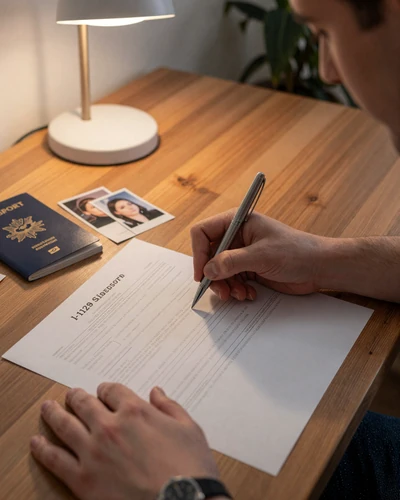
Step 1: File the I-129F Petition
The U.S. citizen petitioner files Form I-129F (Petition for Alien Fiancé(e)) with USCIS. This form establishes that you are a U.S. citizen, that both of you are legally free to marry, and that you have met in person within the past two years. You will need proof of citizenship, evidence of the in-person meeting (photos, boarding passes, hotel receipts), and a signed statement of intent to marry within 90 days.
Step 2: USCIS Processing
USCIS reviews the petition at a service center. As of early 2026, average processing time ranges from 5 to 9 months depending on the center handling your case. During this period, USCIS may issue a Request for Evidence (RFE) if anything is unclear. Responding promptly and thoroughly to RFEs is critical - delays here cascade through every subsequent step.
Step 3: National Visa Center (NVC)
Once USCIS approves the I-129F, the case transfers to the National Visa Center. The NVC assigns a case number and forwards the file to the U.S. embassy or consulate in your fiancée's country. This transfer typically takes 4 to 6 weeks.
Step 4: Embassy Interview
Your fiancée attends an in-person interview at the U.S. embassy. She must bring her DS-160 application, medical examination results, police clearance certificates, evidence of the relationship, and the I-134 Affidavit of Support from you. The interview assesses whether the relationship is genuine and whether she meets admissibility requirements. For couples who met Thai women through our platform, the Bangkok embassy is one of the busiest K-1 processing posts - scheduling your interview early is advisable.
Step 5: Visa Issuance and Travel
If approved, the embassy issues a K-1 visa valid for six months. Your fiancée must enter the United States within that window. Upon entry, Customs and Border Protection stamps her passport with a 90-day admission period.
Step 6: Marriage Within 90 Days
You must legally marry within 90 days of her arrival. There is no extension. Plan your wedding logistics - marriage license requirements vary by state - before she arrives. Many couples opt for a simple courthouse ceremony first, followed by a larger celebration later.
Step 7: Adjustment of Status to Permanent Resident
After marriage, your spouse files Form I-485 (Application to Register Permanent Residence) along with Form I-765 (Employment Authorization) and Form I-131 (Advance Parole for travel). USCIS will schedule a biometrics appointment and, eventually, a green card interview. The initial green card is conditional (2 years). You must jointly file Form I-751 to remove conditions before the two-year mark.
K-1 Visa Timeline and Costs at a Glance
The total investment in time and money is significant. The table below provides estimates based on 2025-2026 USCIS fee schedules and average processing reports.
| Stage | Estimated Timeline | Approximate Cost |
|---|---|---|
| I-129F Petition Filing | 5-9 months | $535 (USCIS filing fee) |
| NVC Transfer | 4-6 weeks | $0 |
| DS-160 & Embassy Interview | 2-4 months | $265 (visa fee) |
| Medical Examination | 1-2 weeks | $200-$500 (varies by country) |
| Travel to the US | Within 6 months of visa | $500-$1,500 (flight) |
| Marriage (90-day window) | Within 90 days | $50-$100 (license fees) |
| I-485 Adjustment of Status | 8-14 months | $1,440 (filing + biometrics) |
| Total Estimated | 12-24 months end-to-end | $2,990-$4,340+ |
Note: Costs do not include attorney fees ($1,500-$5,000 typical), translation services, or additional trips to visit your fiancée. Actual timelines vary by USCIS service center workload, embassy appointment availability, and individual case complexity.
Documents You'll Need for the K-1 Visa Application
Missing paperwork is the number one cause of delays and denials. Organize everything well before filing. Here is a categorized checklist.
Petitioner Documents (U.S. Citizen)
- Proof of U.S. citizenship - birth certificate, naturalization certificate, or valid U.S. passport
- Passport-style photographs - recent, meeting State Department specifications
- Evidence of legal name changes - if applicable (marriage/divorce decrees)
- Proof of termination of prior marriages - divorce decrees or death certificates for all previous spouses
- I-134 Affidavit of Support - tax returns, W-2s, and employment letter proving income at 100% of federal poverty guidelines
- Police clearance - required if you lived abroad for 6+ months after age 16
Beneficiary Documents (Your Fiancée)
- Valid passport - from her country of nationality
- Birth certificate - original with certified translation if not in English
- Police clearance certificates - from every country she lived in for 6+ months after age 16
- Medical examination results - conducted by a USCIS-approved panel physician
- Passport-style photographs - meeting U.S. visa specifications
- Proof of termination of prior marriages - if applicable
Relationship Evidence
USCIS and the embassy want to see that your relationship is genuine. Provide a combination of:
- Photographs together - with dates, locations, and context
- Communication records - chat logs, call records, video call screenshots
- Travel evidence - boarding passes, hotel bookings, visa stamps proving you met in person
- Affidavits from friends and family - signed statements from people who know you as a couple
- Receipts of gifts - delivery confirmations, remittance records
"The strongest K-1 visa applications tell a story. Immigration officers want to see a natural progression from first contact to commitment - not just a stack of forms." - American Immigration Lawyers Association (AILA), 2025 Practice Advisory
When dating Pakistani women or women from other South Asian countries, be aware that additional cultural documentation - such as family blessing letters - can strengthen your case, even though they are not formally required. Embassy officers familiar with the region appreciate evidence of family awareness and acceptance.
Alternative Visa Options for International Couples
The K-1 is not the only path. Depending on your circumstances, another visa category may be faster, cheaper, or more appropriate.
CR-1 / IR-1 Spousal Visa
If you marry abroad before applying, your spouse can apply for a CR-1 (married less than 2 years) or IR-1 (married 2+ years) immigrant visa. The advantage: she enters the US as a permanent resident immediately - no 90-day marriage deadline, no separate adjustment of status. The disadvantage: the overall process often takes 12 to 18 months from petition to entry, similar to K-1 but without the option to be together in the US during processing. According to the National Visa Center's 2025 annual report, CR-1 petitions averaged 13.5 months from filing to visa issuance.
Tourist Visa (B-1/B-2) for Visits
A tourist visa allows your partner to visit the US for up to 6 months but does not permit marriage with intent to stay. If an immigration officer suspects she entered on a B-2 visa with the intention to adjust status, the consequences are serious - potential visa revocation, deportation, and future bars on entry. Use tourist visas only for genuine visits; do not attempt to use them as a shortcut to immigration.
K-1 vs. CR-1: Which Is Right for You?
Choose K-1 if: you want to marry in the US, your fiancée does not have a tourist visa, or you prefer to be together during the adjustment process.
Choose CR-1 if: you are comfortable marrying abroad, you want her to arrive as a permanent resident, or you want to avoid the separate adjustment of status step and its additional fees.
Both paths lead to the same destination - permanent residency - but the journey differs in cost, timeline, and where you are physically together during the process.
Tips to Strengthen Your Application
Immigration attorneys consistently identify the same factors that separate approved cases from denied ones. Here is what you can control.
- Document everything from day one. Save your first message, screenshot video calls, photograph yourselves together with timestamps. The richer your evidence file, the smoother every interview will go.
- Meet the in-person requirement early. Plan your trip as soon as the relationship feels serious. A second or third visit before filing demonstrates commitment beyond the minimum.
- Be financially transparent. The I-134 income requirement is 100% of the poverty line (approximately $22,590 for a two-person household in 2026). If your income is borderline, include a joint sponsor's affidavit proactively.
- Hire a qualified immigration attorney. AILA-member attorneys specialize in family-based immigration. Their fee ($1,500-$5,000) is a fraction of the emotional and financial cost of a denied petition.
- Prepare your fiancée for the embassy interview. She will be asked about your relationship timeline, how you met, your plans after marriage, and where you will live. Practice answering these questions naturally and honestly.
This article provides general educational information about the K-1 visa process and is not legal advice. Immigration law changes frequently, and individual cases vary widely. Always consult a licensed immigration attorney before filing any petition. The information reflects USCIS policies as of early 2026 and may not account for subsequent regulatory changes.
Summary: Your K-1 Visa Action Plan
Key Steps to Remember
- The K-1 fiancée visa lets your partner enter the US to marry within 90 days - budget $3,000-$4,500+ and 12-24 months
- File Form I-129F with USCIS, including proof of citizenship, in-person meeting, and intent to marry
- Your fiancée completes DS-160, medical exam, and embassy interview in her home country
- Document your relationship continuously - photos, chats, travel records, and family statements
- Consider CR-1 spousal visa as an alternative if you prefer to marry abroad first
- Hire an AILA-member immigration attorney to avoid costly errors and delays
- Start with genuine connections - meet verified women on Dating Love Stories to begin your journey
The visa process is demanding, but tens of thousands of international couples complete it successfully every year. The key is preparation: start collecting evidence from the very beginning of your relationship, understand each step before you reach it, and invest in professional legal guidance. The bureaucratic path has a clear destination - building a life together in the United States with the woman you love.