
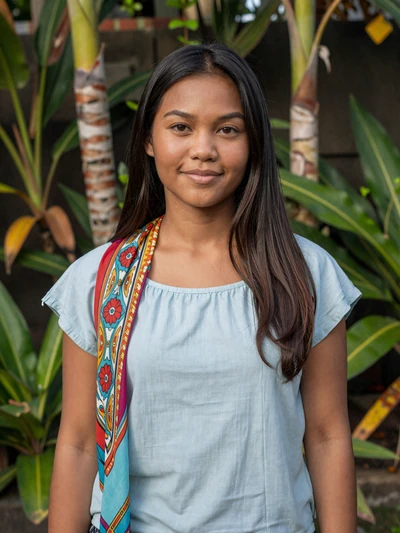
Maria
Traditional tebe dance, cooking, church choir
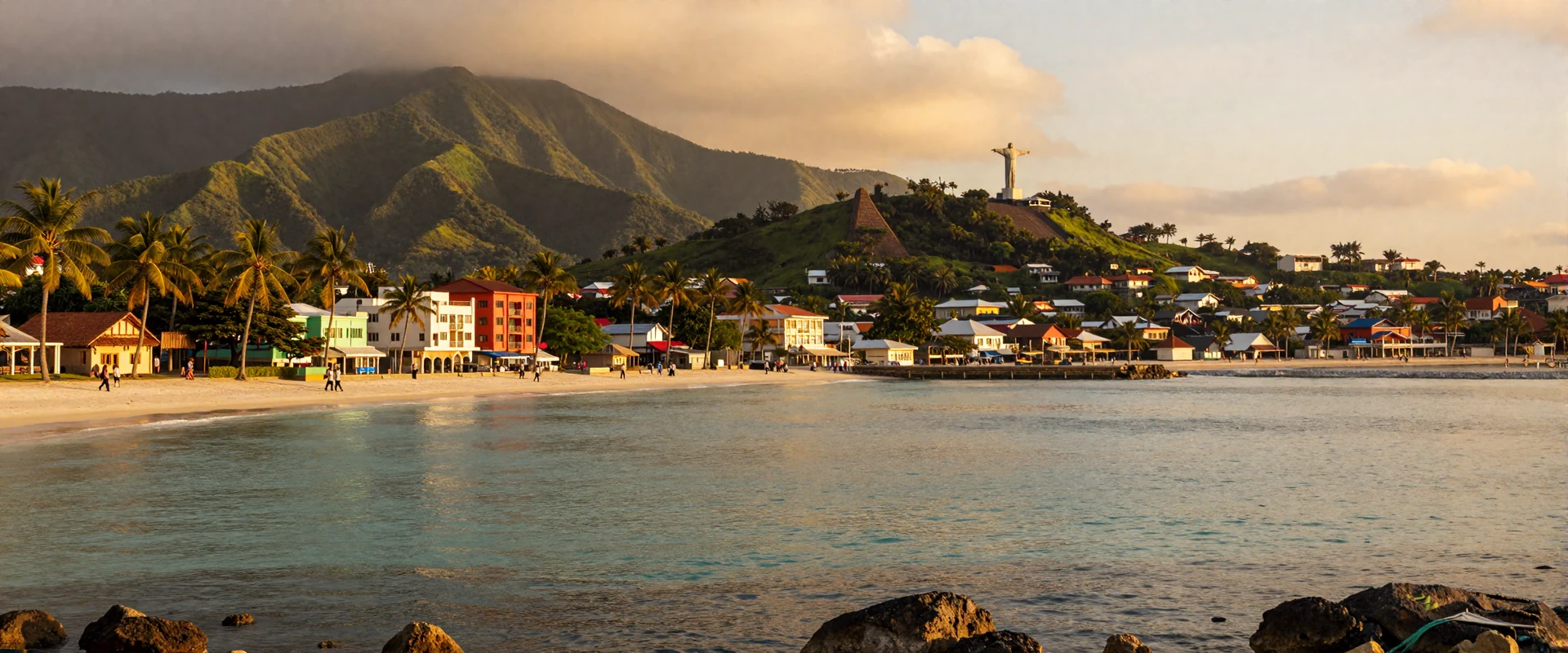
Connect with warm, faith-driven women from Asia's youngest nation. Timorese women carry the resilience of independence, the warmth of Catholic values, and centuries of Melanesian and Portuguese heritage - browse verified profiles from Dili, Baucau, and the global diaspora.
Real women, verified profiles, ready to connect
Traditional tebe dance, cooking, church choir
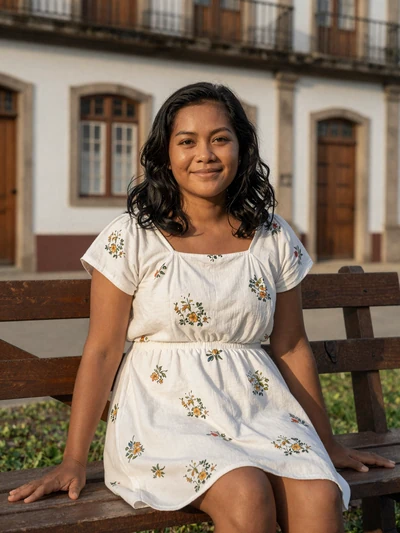
Weaving tais cloth, gardening, community teaching
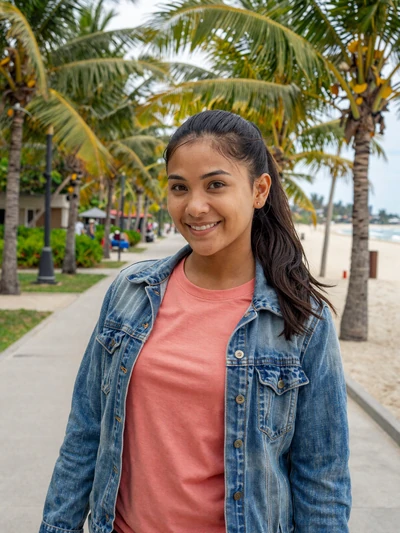
Swimming, reading, social work, coffee farming
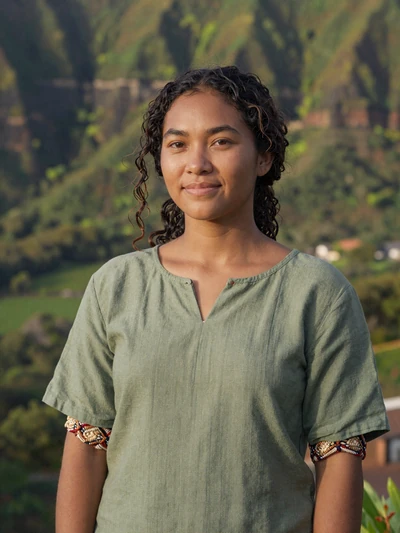
Hiking, cooking batar da'an, singing hymns
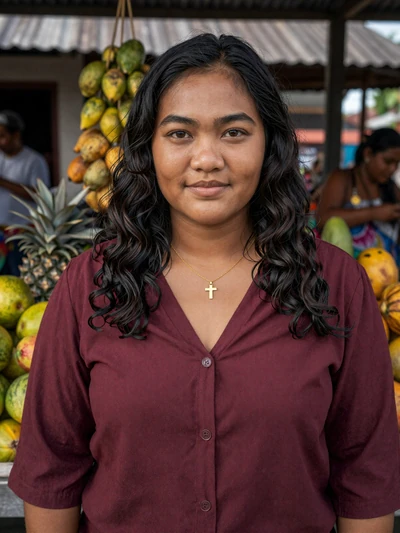
Traditional medicine, farming, church ministry

Journalism, yoga, Portuguese literature, travel

Nursing, tebe dance, cooking, community events
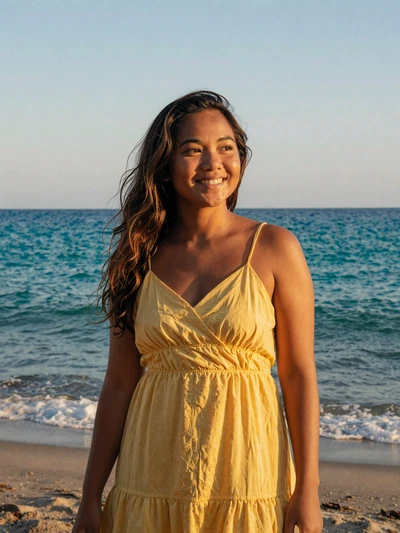
Music, painting, teaching English, beach walks
Timorese women dating introduces Western men to some of the most warm-hearted, deeply faithful, and culturally fascinating women in all of Southeast Asia. Timor-Leste - also known as East Timor - is Asia's youngest nation, having gained full independence only in 2002 after a quarter-century struggle against Indonesian occupation. This tiny half-island country of just 1.34 million people (World Bank, 2025) sits at the crossroads of Melanesia and Southeast Asia, producing women whose character is shaped by an extraordinary blend of Catholic devotion, Portuguese colonial heritage, and ancient Melanesian traditions that exist nowhere else on earth. For Western men seeking a partner whose faith, resilience, and family devotion run deep, Timorese women offer a remarkably genuine and meaningful connection that stands apart from mainstream international dating.
What makes Timorese women dating uniquely compelling is the cultural DNA of this small nation. Timor-Leste is the only predominantly Catholic country in Southeast Asia - approximately 97.6% of the population identifies as Roman Catholic (Timor-Leste Census, 2024). This shared Christian faith creates an immediate cultural bridge with Western men that rarely exists in other Asian dating categories. Combined with a Portuguese-speaking heritage (Portuguese is one of two official languages), a Melanesian warmth that visitors consistently describe as "the friendliest people in Asia," and a national spirit forged through one of the 20th century's most inspiring independence struggles, Timorese women bring a depth of character and spiritual grounding that transforms relationships. The best way to meet Timorese women online in 2026 is through verified platforms that recognize both the cultural richness and the genuine aspirations of East Timorese women seeking committed, cross-cultural partnerships.
Timor-Leste's small population and limited economic development create a dating landscape where educated, ambitious women often face restricted options within their immediate communities. The country's GDP per capita remains among the lowest in Asia at approximately $1,660 (IMF, 2025), and while oil revenues have funded infrastructure development, professional opportunities for women remain concentrated in Dili, the capital. A 2024 UNDP report found that 68% of Timorese women aged 20-35 in urban areas expressed interest in meeting partners from abroad, citing "desire for personal growth," "shared Catholic values with Western men," and "aspiration for stable family life" as primary motivations.
Here's the thing: the Catholic faith creates a natural cultural bridge that is unique in Asian dating. Unlike most Southeast Asian dating categories where religious differences require careful navigation, Timorese women share the same spiritual framework as Western Christian men. Sunday Mass, Catholic holidays (Christmas, Easter, Assumption of Mary), prayer before meals, and the moral structure of Catholic teaching are daily realities for Timorese women - not abstract concepts requiring explanation. A 2025 Pew Research Center study found that Timor-Leste has the highest rate of weekly Mass attendance in Asia at 82%, meaning that faith for Timorese women is active, practiced, and central to their identity and their expectations of a partner.
The Portuguese colonial legacy adds another layer of cultural accessibility. While the 450-year Portuguese presence (1515-1975) left complex historical wounds, it also created cultural connections that Timorese women carry forward: Portuguese names (Maria, Filomena, Celestina), Catholic institutions that form the backbone of education and healthcare, a culinary tradition blending tropical ingredients with Mediterranean techniques, and - among educated urban women - proficiency in Portuguese that connects them to the broader Lusophone world of Brazil, Portugal, Mozambique, and Angola. For Western men who speak Portuguese or Spanish (which is closely related), this linguistic bridge opens extraordinary communication possibilities.
The parallels with Filipino women dating are striking and illuminating. Both nations are majority-Catholic in a region dominated by Buddhism and Islam, both experienced long periods of Western colonial influence (Spain and America for the Philippines, Portugal for Timor-Leste), and both have produced women who blend deep family devotion with openness to international relationships. However, Timorese women bring distinct Melanesian cultural elements - darker skin tones, communal land traditions, animist spiritual layers beneath Catholic practice, and the unique tais weaving tradition - that create a cultural experience unlike any other in Southeast Asia.
Timorese dating culture operates at the intersection of three powerful cultural forces: Roman Catholic moral teaching, Melanesian communal traditions, and a Portuguese-influenced social sensibility that values courtesy, formal expressions of affection, and structured courtship. Understanding how these forces interact is essential for any Western man seeking a genuine relationship with a Timorese woman - each layer shapes her expectations, her family's requirements, and the rhythm of romantic life in Timor-Leste.
The Catholic framework is foundational. With 97.6% of the population Catholic, the Church is not merely a religious institution in Timor-Leste - it is the moral authority that guided the nation through occupation and independence and continues to shape every significant life transition, including marriage. During the Indonesian occupation (1975-1999), the Catholic Church was the only institution that openly supported Timorese independence, and Timorese bishops like Nobel laureate Carlos Filipe Ximenes Belo became national heroes. This history means that Catholic identity in Timor-Leste carries a patriotic dimension that few other countries experience - being Catholic and being Timorese are inseparable identities.
What does this mean in practice for dating?
Melanesian communal traditions add a second layer. Beneath the Catholic surface, Timorese culture retains powerful animist and communal traditions that predate European contact by thousands of years. The lulik (sacred) tradition governs family relations, land ownership, and marriage customs through ancestral obligations that Timorese people honor alongside Catholic practice. The barlake system - often translated as "bride price" but more accurately understood as a reciprocal exchange of gifts between families - remains the single most important cultural institution in Timorese marriage, practiced by an estimated 85% of couples including educated urban professionals (Timor-Leste National University study, 2024).
"When I married Juliana, the barlake ceremony lasted two days. Her family's elders discussed our ancestors, exchanged tais cloth and livestock, and blessed us with holy water and sacred betel nut. Then we had a full Catholic wedding Mass the next week. Both ceremonies were essential - one honored the ancestors, the other honored God. Juliana would say they honored the same truth through different languages." - David, 47, Perth, married to a Timorese woman in 2024
The connection to Indonesian women dating provides important historical context. Timor-Leste was under Indonesian occupation from 1975 to 1999, and the relationship between the two nations remains complex. While geographic proximity means that some Timorese women speak Indonesian (Bahasa Indonesia) alongside Tetum and Portuguese, cultural identity is fiercely distinct. Comparing a Timorese woman to an Indonesian woman can be perceived as insensitive - they fought and lost an estimated 180,000 people (roughly one-third of the pre-occupation population) to secure their separate identity. Respect for Timorese sovereignty and cultural uniqueness is foundational to earning trust.
| Cultural Value | Traditional Timorese Practice | Modern Dili Approach |
|---|---|---|
| Catholic Faith Role | Mass attendance mandatory; parish priest blesses all major life decisions including marriage | Faith remains central; younger women may attend progressive parishes but weekly attendance still over 75% |
| Family Approval | Extended family elders (lia-na'in or "keepers of the word") must formally approve the match | Parents remain primary decision-makers; extended family consulted but individual choice gaining weight |
| Bride Price (Barlake) | Reciprocal exchange: groom's family gives livestock, money, and tais; bride's family provides household goods | Still practiced by 85%; amounts negotiated flexibly; symbolic barlake common among educated couples |
| Language of Courtship | Tetum with local dialects; love songs and traditional poetry in courtship | Tetum primary; Portuguese among educated; English growing; multilingual messaging common on platforms |
| Community Involvement | Entire suco (village community) participates in wedding celebrations lasting 2-3 days | Church community replaces village in urban settings; weddings still multi-day events with 200-500 guests |
| Marriage Ceremony | Dual ceremony: traditional barlake exchange followed by Catholic church wedding Mass | Same dual structure preserved; some urban couples simplify barlake but full Catholic Mass remains universal |
| Physical Boundaries | Public displays of affection highly restricted; holding hands acceptable only after engagement | More relaxed in Dili cafes and parks; kissing in public still uncommon; family gatherings remain formal |
Family is not just important in Timorese dating - it is the institution through which all relationships gain legitimacy, support, and meaning. Timor-Leste's collectivist culture, rooted in Melanesian clan structures and reinforced by Catholic parish networks, means that your relationship with a Timorese woman is fundamentally a relationship with her entire family and community. According to a 2025 study by the National University of Timor-Leste, 91% of Timorese women under 35 reported that family approval was "essential" or "very important" before accepting a marriage proposal - the highest rate among all Catholic-majority countries globally.
The lia-na'in system deserves particular attention. In Timorese culture, every family has a lia-na'in - a "keeper of the word" or family spokesperson who serves as the official negotiator during courtship and marriage proceedings. This elder (usually a senior uncle or grandfather) represents the family's interests, negotiates the barlake terms, and formally approves or declines the match. Meeting the lia-na'in is a milestone event in Timorese courtship, roughly equivalent to asking for a father's blessing in Western tradition but with greater formality and communal significance.
Consider this: the barlake exchange, while sometimes misunderstood by Western observers as "buying a bride," is actually a sophisticated system of reciprocal obligation that binds two families together for generations. The groom's family (umane) provides livestock (typically water buffalo, goats, or their monetary equivalent), tais cloth, and cash to the bride's family (fetosaa). In return, the bride's family provides household goods, tais cloth of different patterns, and ongoing support to the new couple. The amounts vary dramatically - from symbolic exchanges among educated urban families to negotiations involving dozens of water buffalo in rural areas. A 2024 Timor-Leste National University ethnographic study found that average urban barlake in Dili was equivalent to $800-$3,000, while rural barlake could reach $5,000-$15,000 in livestock value.
For Western men, navigating barlake requires sensitivity and willingness to participate. You don't need to provide water buffalo - most families will accept monetary equivalents or negotiate terms appropriate to a cross-cultural context. What matters is your willingness to engage with the tradition respectfully, showing that you value Timorese customs rather than dismissing them as anachronistic. Your Timorese partner's family will guide you through the process, and the lia-na'in will ensure that expectations are communicated clearly.
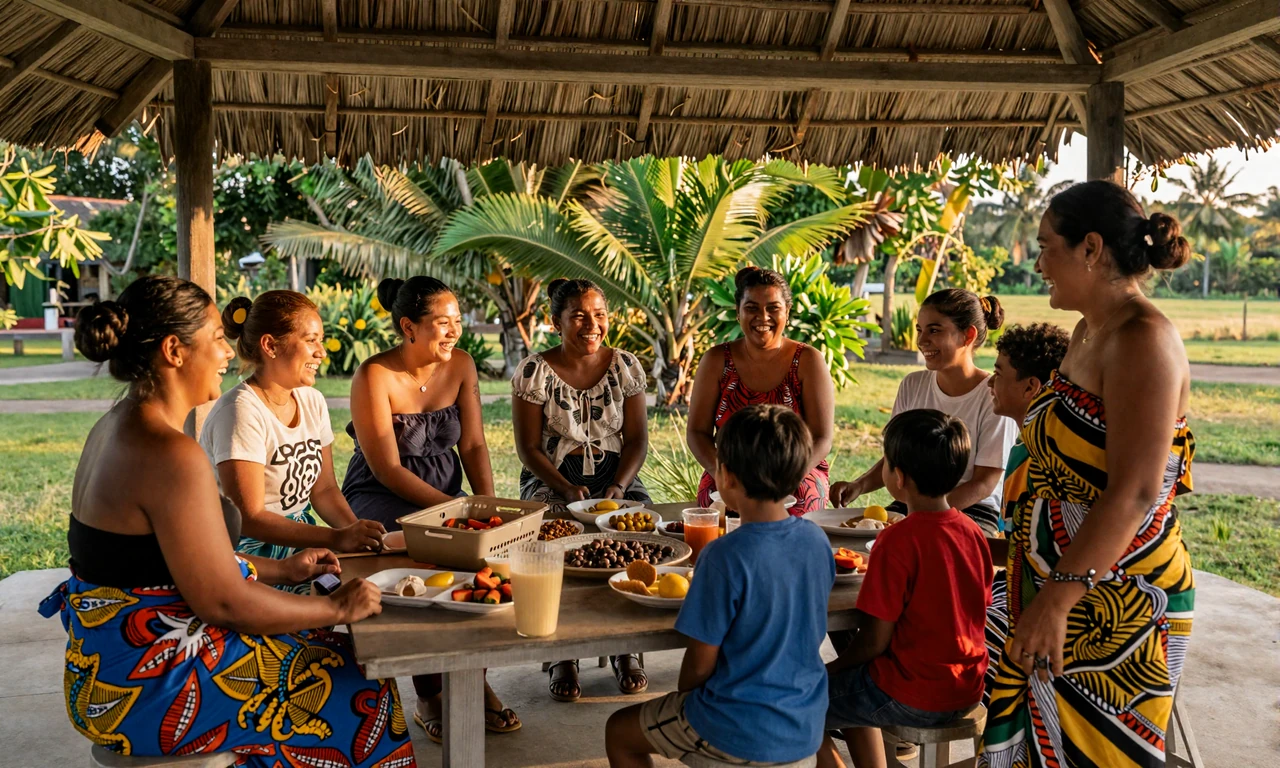
Timorese women bring a constellation of qualities that Western men consistently describe as transformative - not despite their nation's difficult history, but because of how that history has shaped character, faith, and relational depth.
Resilience forged through struggle. Timor-Leste's path to independence cost an estimated 180,000 lives - roughly one-third of the population. Every Timorese woman alive today either experienced the occupation directly or was raised by a generation that survived it. This collective memory produces women of extraordinary inner strength who do not take stability, safety, or partnership for granted. According to the 2025 Global Resilience Index, Timorese women scored among the highest worldwide for "adaptive resilience" - the ability to maintain emotional stability, find solutions under pressure, and sustain hope during prolonged difficulties. In a relationship, this translates to a partner who stands beside you through any challenge rather than retreating.
Deep Catholic faith that creates shared values. Unlike most Asian dating contexts where religious differences require careful bridging, Timorese women's Catholic faith provides immediate alignment with Western Christian men on fundamental questions: the sanctity of marriage, the importance of prayer, the moral framework for raising children, and the role of forgiveness in maintaining long-term partnerships. The Catholic Church in Timor-Leste actively supports marriage counseling, family unity programs, and community support networks - meaning that your relationship has institutional support from an organization your Timorese partner trusts completely.
But there's a catch: even if you're not Catholic yourself, understanding and respecting Catholic practice is essential. A non-Catholic partner can marry a Timorese woman in the Catholic Church (with a dispensation from the bishop), but dismissing her faith or refusing to participate in Catholic family rituals will create insurmountable friction. The minimum expectation is respectful attendance at Mass and openness to Catholic values in your shared life.
Warmth and hospitality rooted in Melanesian culture. Visitors to Timor-Leste universally remark on the extraordinary friendliness of the people. The Melanesian cultural tradition of communal sharing - where food, resources, and emotional support flow freely within extended networks - produces women whose default mode is generosity. When a Timorese woman cares for you, she cares completely and openly, without the emotional reservedness that characterizes some East Asian dating cultures. Her affection is warm, physical (within cultural boundaries), and unmistakably genuine.
The tais tradition as a window to her soul. Tais - the handwoven cloth that is Timor-Leste's most important cultural artifact - reveals something essential about Timorese women's character. Each tais pattern tells a story: family lineage, regional identity, spiritual beliefs, and social status are all encoded in the intricate geometric designs that Timorese women learn to weave from their mothers and grandmothers. A woman who weaves tais possesses patience, artistic sensitivity, attention to detail, and a deep connection to ancestral heritage. When she gives you a tais, she is giving you a piece of her family's history - treat it accordingly.
Building a relationship with a Timorese woman requires specific cultural awareness that differs from other Southeast Asian dating contexts. The Catholic-Melanesian cultural blend creates unique expectations and opportunities that, when navigated with respect and genuine interest, lead to deeply rewarding partnerships.
Respect Catholic values visibly - attend Mass with her (even if you're not Catholic), learn to say grace before meals, and participate in prayer with her family. These are not performances - they are demonstrations of respect for her deepest identity.
Understand the barlake tradition early - ask her to explain her family's expectations around bride price exchange. Your willingness to engage shows cultural respect; your resistance signals disrespect.
Learn basic Tetum greetings - "Bondia" (good morning), "Obrigadu/Obrigada" (thank you, masculine/feminine), "Ha'u hadomi o" (I love you). Tetum is phonetically simple and your effort will be deeply appreciated.
Appreciate her resilience without reducing it to tragedy - Timorese women are proud of their nation's independence, not defined by its suffering. Celebrate Restoration of Independence Day (May 20) with her, but don't treat her as a victim.
Engage with her community - attend church festivals, join family meals, participate in suco (community) events. Timorese culture is collective - isolating her from community signals that you don't understand her world.
Coffee is cultural currency - Timor-Leste produces some of the world's finest organic coffee (Café Timor is globally recognized). Appreciating Timorese coffee shows cultural awareness; bringing specialty coffee as a gift scores major points.
The comparison with Filipino women dating is particularly instructive for understanding Catholic Southeast Asian courtship. Both Filipina and Timorese women come from majority-Catholic countries with Western colonial legacies (Spain/America for the Philippines; Portugal for Timor-Leste). Both cultures emphasize family involvement, parish priest guidance, and structured courtship leading to Catholic marriage. However, key differences exist: Timorese women are generally more reserved in initial interactions than Filipinas, the barlake tradition has no direct Filipino equivalent, and Timorese attachment to ancestral land and village identity runs deeper than in the more urbanized Philippines. Understanding these nuances helps you approach each culture with appropriate calibration.
The practical realities of meeting Timorese women vary between those living in Timor-Leste and the diaspora, each offering distinct advantages and considerations for Western men.
In Timor-Leste (Dili, Baucau, Maliana, Suai): Dili, the capital, is a small, walkable city of approximately 280,000 people. International flights connect through Bali (Indonesia), Darwin (Australia), or Singapore. A 10-day visit costs approximately $1,500-$3,500 from the US, including flights ($800-$1,800), accommodation ($30-$80/night in Dili), and daily expenses. Tourism infrastructure is basic but functional - Dili has several international-standard hotels and a growing café culture. Internet connectivity reaches approximately 40% of the population (ITU, 2025), concentrated in urban areas. Safety is generally good for foreigners - the US State Department classifies Timor-Leste as Level 2 ("Exercise Increased Caution"), primarily due to infrastructure rather than crime concerns.
Timorese diaspora (Australia, Portugal, UK): The largest Timorese diaspora community lives in Australia, primarily in Melbourne (estimated 30,000+) and Darwin (12,000+), with smaller communities in Sydney and Perth. Portuguese-speaking Timorese communities also exist in Lisbon and London. Melbourne's Timorese community is well-organized, with cultural centers, Catholic parishes serving Timorese congregations, and regular community events including Restoration Day celebrations, tais weaving workshops, and fundraising gatherings. For Western men in Australia, meeting Timorese women through community events is remarkably accessible.
For those considering K-1 fiancée visa applications with a Timorese partner, processing occurs through the US Embassy in Dili (which reopened full consular services in 2023). Average processing time from petition filing to visa issuance is approximately 10-14 months for Timorese nationals. Documentation of your relationship - including evidence of in-person meetings, chat logs, video call records, and photographs - is critical. Our visa and immigration guide for international couples provides comprehensive step-by-step guidance for the K-1 process.
Dating Love Stories verifies every Timorese profile through a rigorous three-step process tailored to the unique characteristics of this community. Verification includes government-issued identification (Cartão de Identificação Nacional), real-time selfie matching with profile photos, and optional video verification calls with our moderation team. Given Timor-Leste's limited internet infrastructure, we offer flexible verification scheduling that accounts for connectivity challenges in rural areas - approximately 38% of our Timorese members verify through video calls from Dili-based internet cafés or community centers with stable connectivity.
In 2025, our Timor-Leste-focused team identified and removed approximately 180 suspicious accounts before they could interact with Western users. Common red flags specific to Timorese dating include: profiles using photos from Indonesian or Filipino modeling sites (facial features differ noticeably to trained moderators), claims of Timorese identity from individuals actually located in other countries, and urgent financial requests citing medical emergencies or family crises. For comprehensive safety guidance, our online dating safety guide provides detailed checklists applicable to all international dating contexts.
Timorese women dating represents one of the most authentic and culturally rich paths in international dating in 2026. These women aren't seeking to leave their culture behind - they're looking for partners who recognize that Timor-Leste's extraordinary blend of Catholic faith, Melanesian warmth, and Portuguese heritage creates something genuinely rare. If you value spiritual depth, unwavering loyalty, community-minded partnership, and a woman whose resilience is matched only by her capacity for love, Timorese women offer something you won't find anywhere else. Create your free profile today, browse verified profiles from Dili to Melbourne, and begin a conversation that could transform both your lives.
Three defining traits that shape Timorese women's approach to love and partnership
As the only majority-Catholic nation in Southeast Asia (97.6%), Timorese women carry a faith that is lived daily - Sunday Mass, family prayer, parish community involvement. This spiritual depth creates a natural alignment with Western Christian men that is rare in Asian dating. Her faith isn't a footnote; it's the foundation of every relationship decision she makes.
The ancient art of tais weaving encodes family stories, regional identity, and spiritual meaning in every thread. Timorese women learn this craft from their mothers and grandmothers, developing patience, artistic sensitivity, and deep ancestral connection. When she gives you a tais, she is sharing centuries of cultural identity woven with her own hands.
Timor-Leste's 24-year struggle for freedom shaped a generation of women with extraordinary inner strength. Timorese women don't just endure hardship - they transform it into hope, community, and forward momentum. In a relationship, this resilience means a partner who never gives up on your shared future, no matter what challenges arise.
Dating in Timor-Leste is structured around Catholic values and Melanesian communal traditions. Courtship typically begins with formal introductions through family or church networks. Public displays of affection are uncommon, and the relationship progresses through family-supervised stages: initial meetings, regular visits with family present, parish priest consultation, barlake (bride price) negotiation, and Catholic church wedding. Urban Dili has a growing café culture where younger couples enjoy more privacy, but family involvement remains central - 91% of Timorese women consider family approval essential before marriage (National University of Timor-Leste, 2025). For international dating, video calls and platform messaging provide the initial connection, followed by in-person visits coordinated with her family.
Yes, and their presence on international dating platforms has grown significantly since 2023. A 2024 UNDP report found that 68% of urban Timorese women aged 20-35 expressed interest in meeting international partners. Internet penetration in Timor-Leste reached approximately 40% in 2025, concentrated in Dili and district capitals. Timorese women in the diaspora - particularly Melbourne (30,000+) and Darwin (12,000+) in Australia - are more active on dating platforms due to better internet access. On Dating Love Stories, all Timorese profiles undergo rigorous ID verification, photo matching, and optional video confirmation to ensure authenticity.
Timor-Leste has two official languages: Tetum (the national lingua franca spoken by approximately 80% of the population) and Portuguese (spoken fluently by about 25% of adults, primarily educated urban professionals). Additionally, there are 30+ indigenous Austronesian and Papuan languages spoken across the country's 13 districts. Indonesian (Bahasa Indonesia) is still understood by older generations due to the occupation period. English is increasingly taught in schools and universities - approximately 15% of urban youth have conversational English ability. Our platform integrates Tetum-English translation for messaging, and we recommend learning basic Tetum phrases like 'Bondia' (good morning) and 'Obrigadu' (thank you) to build emotional connection.
Timor-Leste is generally safe for foreign visitors. The US State Department classifies it as Level 2 ('Exercise Increased Caution'), primarily due to infrastructure limitations rather than crime. Dili has a relaxed atmosphere, and Timorese people are known for exceptional hospitality toward foreigners. Petty crime exists but violent crime against tourists is rare. Practical considerations: roads outside Dili can be challenging (4WD recommended), medical facilities are limited (travel insurance with medevac coverage is essential), and the rainy season (November-April) can cause flooding. International flights connect through Bali, Darwin, or Singapore. A 10-day visit costs approximately $1,500-$3,500 from the US, including flights, accommodation, and expenses.
Approximately 97.6% of Timorese women are Roman Catholic, making Timor-Leste the most Catholic country in Asia and the third-most Catholic country globally (after Vatican City and East European microstates). Catholicism in Timor-Leste carries a unique patriotic dimension - the Catholic Church was the primary institutional supporter of independence during the Indonesian occupation, and Catholic identity is deeply intertwined with national identity. Weekly Mass attendance is 82% (Pew Research, 2025), the highest in Asia. Traditional animist practices (lulik traditions) coexist with Catholic faith, particularly in rural areas. For Western men, this strong Catholic majority creates a shared spiritual framework that is rare in Southeast Asian dating - a powerful cultural bridge for Christian men seeking faith-aligned partnerships.